









Cloning is usually a work of fiction, seen in media like Star Wars, My Hero Academia and Mickey 17. The common link between those is that it’s the same person that is being cloned over and over. Nobody really thinks that it would actually become reality but due to more recent innovations in science technology, it has.
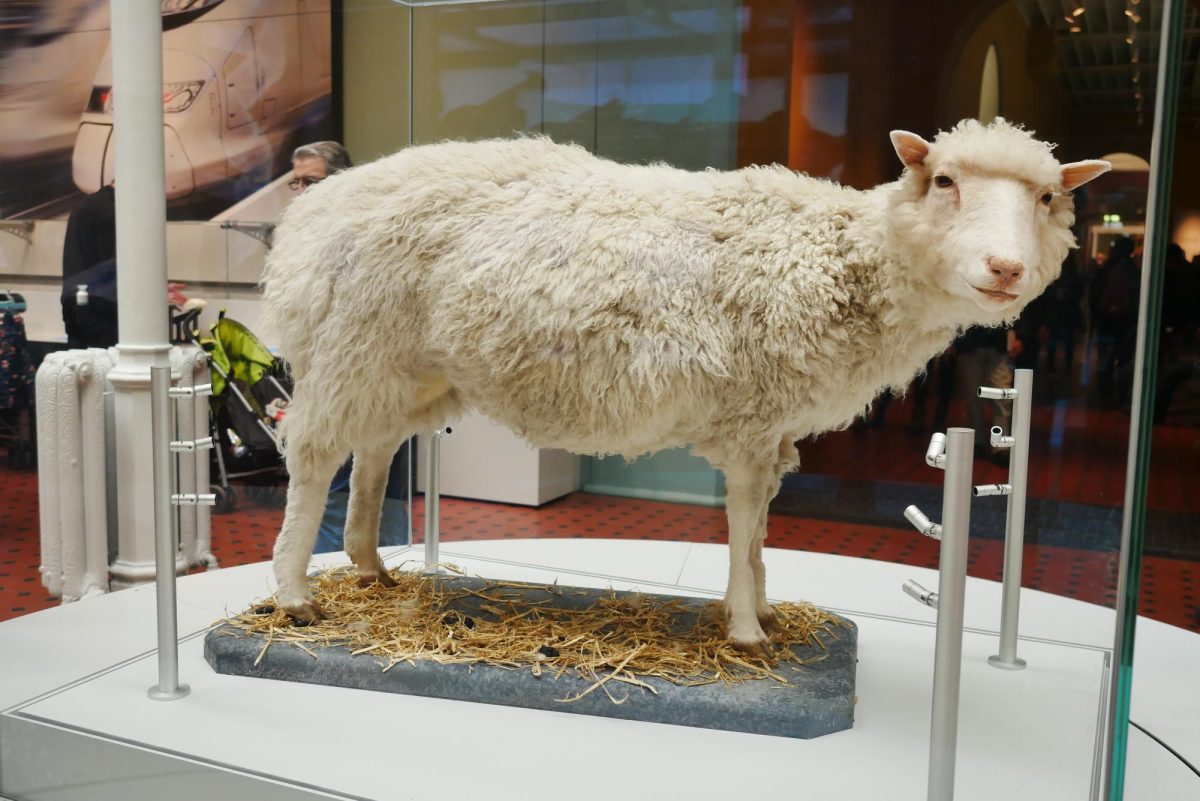
There is a long history to cloning, dating all the way back to 1885 with the first ever live demonstration of artificial embryo twinning. The next big step in cloning was in 1996 where Ian Wilmut and Keith Campbell cloned a sheep named Dolly. After that is in 2001 where multiple groups brought back endangered animals by using similar species to serve as surrogates. The most recent step was back in 2013 where researcher Shoukhrat Mitalipov and his colleagues created a human embryo that could be used as a source for embryonic stem cells. The experiment was a success when they modified the liquid used and electric pulses to stimulate the egg to start dividing.
Cloning can occur in many forms, some through natural means, like abiotic organisms and asexual reproduction. But that only happens in single celled organisms like bacteria. There’s also another kind of technical cloning in the form of identical twins but that’s very unlikely and irregular. The last kind of cloning is artificial cloning, the kind seen in science fiction. Under the umbrella of artificial cloning there are multiple different types of it. These are gene cloning, reproductive cloning and therapeutic cloning. All three have different ways that they work, gene cloning just copies certain genes or sets of DNA. Reproductive cloning copies the entire animal and therapeutic cloning involves producing stem cells for treating damaged or diseased tissue.
There are big issues with cloning besides the technology of it, huge issues that a lot of people don’t mention. One of them is the mental stress of cloning. If we let clones become widespread and mainstream, It would be difficult to tell who the original is because it is an exact clone of someone.
“I think it is an ethical option. I am also biased- if cloning was an option, I’d be the first to sign up. Not specifically for a new me, but I’d want to clone my own heart cells because my history has a long history of heart disease.” Dr. Erin Rhodes, said.
Emotional factors tie into cloning as well and deciding who gets to be cloned, some people would take more priority than others. But who gets to choose who is cloned and when, would we leave it up to the scientists or the researchers, or even the engineers who built the machines.
With the next point, the mandating of cloning. How would one exactly go about regulating the use of cloning devices if they were widespread. It should not be commercialized and should not be given out to the public because who knows what kind of person would just be able to take DNA from people to create a so-called “perfect soldier” and then mass produce that person and take over a country. There are simply too many variables for it to be let out to the general public, but the same could be said for a lot of modern technology. Every piece has its dangers, whether it be implications of what it could do in the future or just what could happen to the internal hardware like it exploding or being shocked after it falls into water.
The fact that cloning is coming more into reality is terrifying, although still not in reality yet. Cloning is still heavily a “Yes, but” for me, meaning the idea of cloning could be accepted in the sense of using it for organ donation or in fields where more manpower is required like in highly dangerous fields or fields with highly specified needs. (nuclear facilities, underwater welding or astronauts for a few.) There would definitely need to be more restrictions on the type of cloning, amount and person or persons, but I think it would be able to be done successfully with the right moderation.